

Industry Playbook
We serve growth-focused and operationally complex global businesses that need sector-aware finance,
compliance, controls, and reporting built for scale

Technology, SaaS & Subscription Businesses
- SaaS finance breaks when contracts are treated like simple invoices. The hard part is correctly separating what the customer is buying (subscription, implementation, support, usage, credits) and recognizing revenue based on delivery—not billing. Upgrades/downgrades, renewals, mid-term scope changes, and “free months” create contract modifications that can change revenue timing, contract assets/liabilities, and metrics like ARR/NRR in ways that confuse founders and investors if not handled consistently. Usage-based pricing adds another layer because consideration is variable and needs disciplined estimation and constraint logic.
- Where we go deeper: multi-element allocation approaches, upgrade/downgrade mechanics, usage/overage recognition, renewal cohorts vs accounting revenue, and clean definitions for ARR/MRR that reconcile to statutory numbers.
E-commerce, D2C & Marketplace Sellers
- E-commerce finance is settlement-first, not invoice-first. Marketplace payout statements net off commissions, shipping, collection fees, returns, refunds, replacements, chargebacks, promotional funding, penalties, and “surprise” retro-adjustments—so sales, cash, and profitability will not match unless settlement logic is engineered properly. The repeat leakage points are return/refund timing, fee mismatches, and unresolved deductions that quietly erode contribution margin. COD businesses add further complexity due to remittance cycles and RTO. Multi-channel sellers also face duplication risk when orders, gateways, and bank credits are not stitched into a single transaction chain.
- Where we go deeper: channel-wise payout-to-bank matching, returns/refunds/chargebacks lifecycle accounting, promo-funding treatment, deduction dispute trackers, and contribution margin truth based on actual settlements.
![02.181Podium [Converted]-01-01](https://srmgc.in/wp-content/uploads/elementor/thumbs/02.181Podium-Converted-01-01-1-scaled-rkndpikmerlhholmb0namzzdn4jh076pij4w16knr4.png "02.181Podium [Converted]-01-01")

Manufacturing & Industrial
- Manufacturing economics are driven by yield, throughput, and absorption—not just purchase costs. If you don’t isolate material yield loss, scrap, rework, and downtime, your “gross margin” will look fine while cash and efficiency deteriorate. Plants need standard costing and variance analysis that clearly separates price variance (procurement), usage/yield variance (production), and overhead absorption (capacity/utilization). WIP valuation, multi-stage production, subcontract job-work, and quality-related costs require disciplined logic so profitability is credible at product-line and batch levels.
- Where we go deeper: standard cost setting, variance trees (price vs usage vs yield vs mix), WIP and conversion-cost discipline, batch/job costing, and profitability by SKU/product family based on real process losses.
Logistics, Freight & Warehousing
- Logistics margins are won or lost in exceptions: detention/demurrage, accessorials, claims, penalties, and disputes. Revenue and cost cut-offs are also tricky because delivery, POD, invoicing, and carrier bills rarely line up in the same period. Without contract-wise and lane-wise logic, you end up with “profitable” customers whose deductions and penalties are never recovered. Container business adds a separate dimension because demurrage/detention definitions vary by carrier and region; one wrong assumption can create unbilled exposure.
- Where we go deeper: accrual/cut-off frameworks for freight cycles, accessorial capture and recovery, demurrage/detention ownership rules, claims/penalties accounting, and true lane/customer profitability after deductions.

![05.construc [Converted]-01-01](https://srmgc.in/wp-content/uploads/elementor/thumbs/05.construc-Converted-01-01-scaled-rkndq0fk0m9xm9voeqd7gdh4xg3g2g5lwzj45fu6gw.png "05.construc [Converted]-01-01")
Construction, EPC & Project Businesses
- Project finance breaks when change orders, claims, and retentions are treated casually. Construction-style contracts often require revenue recognition “over time” using progress measurement (frequently cost-to-cost), but that only works if cost-to-complete discipline is real and continuously updated. The most painful issues happen with unpriced change orders and claims—where scope is approved but price is pending—because they behave like variable consideration and can drive volatile cumulative catch-ups if not controlled. Liquidated damages, performance penalties, and loss-making contracts also need early identification to avoid end-of-project shocks.
- Where we go deeper: progress measurement governance, cost-to-complete controls, unpriced change orders/claims handling, retention mechanics, LD/penalty modeling, and contract-level margin integrity throughout the project lifecycle.
Real Estate Developers & Project-led Real Assets
- Real estate finance is constrained by regulation and buyer cash flows, not just construction spend. In India, RERA creates a structural requirement to keep a large portion of collections in a project-specific separate account and restrict withdrawals to project purposes—so project cash planning must reflect those locks, certification trails, and timing realities. Cancellations/refunds, re-bookings, and milestone-based collections create real cash volatility that needs project-level truth (not company-level averages). Joint development structures, landowner payouts, and phased approvals add further complexity in project economics and reporting credibility.
- Where we go deeper: project cash lock logic, withdrawal/certification trails, cancellation/refund exposure mapping, phase-wise project controls, and investor/lender-grade project reporting that reflects regulatory constraints.
![06.Architecture_building_house_following_the_home_design_illustration_concept_vector____ [Converted]-01-01](https://srmgc.in/wp-content/uploads/elementor/thumbs/06.Architecture_building_house_following_the_home_design_illustration_concept_vector____-Converted-01-01-1-scaled-rkndq62l5mhnjxnhhssyvc1whrbncmrzxrg113ltfk.png "06.Architecture_building_house_following_the_home_design_illustration_concept_vector____ [Converted]-01-01")
![vecteezy_hospital-building-for-healthcare-background-vector_ [Converted]-01](https://srmgc.in/wp-content/uploads/elementor/thumbs/vecteezy_hospital-building-for-healthcare-background-vector_-Converted-01-scaled-rkvjmk0bns8qmb1sgqayowslqvxwx96ixte9y9ykw0.png "vecteezy_hospital-building-for-healthcare-background-vector_ [Converted]-01")
Healthcare Providers, Clinics, Hospitals & Diagnostics
- Healthcare revenue is a revenue-cycle problem: claim submission, denials, rework, underpayments, and contract rates drive cash more than “billings.” Payer contracts often contain complex rate cards, bundling rules, authorization requirements, and denial triggers—so cash leakage typically shows up as a growing pile of unresolved denials and short-payments. Package billing versus itemized billing, doctor payout structures, and consumables/drug usage can create margin distortion unless controls exist at procedure/service-line levels.
- Where we go deeper: denial root-cause classification, underpayment identification against payer contracts, rework economics (what is worth appealing), service-line margin integrity, and receivables aging that reflects payer behavior (not just invoice dates).
NBFC, Lending Ops & Credit-led Fintech
- Credit businesses live and die by portfolio classification discipline. “Overdue” is not just collections tracking—it impacts asset classification, income recognition, and provisioning outcomes. RBI-driven norms (like the 90-days overdue trigger for NPA identification in many contexts) make day-count accuracy and borrower-wise classification logic critical. Restructures, settlements, write-offs, bounce charges, and collection agency performance must be handled in a way that keeps the loan book auditable and investor/lender-ready.
- Where we go deeper: clean loan-tape integrity (disbursement → schedule → collections → exceptions), delinquency and classification logic, restructuring and settlement accounting, collection performance attribution, and portfolio reporting that stands up to lender scrutiny.
![08.vecteezy_free-flat-design-vector-business-elements-and-icons_150578 [Converted]-01-01](https://srmgc.in/wp-content/uploads/elementor/thumbs/08.vecteezy_free-flat-design-vector-business-elements-and-icons_150578-Converted-01-01-scaled-rkndqars3so35zgnqcu3psv7goohf4anmepgfheukg.png "08.vecteezy_free-flat-design-vector-business-elements-and-icons_150578 [Converted]-01-01")

Renewable Energy Projects (Solar/Wind/Hybrid/RTC)
- Renewables are contract-led businesses: PPA terms decide billing, payment security, penalties, and cash stability. Project reporting needs to follow how energy is metered, how billing periods are defined, and how tariff components apply—not generic “units × rate.” Scheduling, forecasting, deviation settlement mechanisms, and curtailment/availability definitions can materially impact realized cash flows depending on the PPA and grid rules. If REC revenue is part of the model, then issuance, validity, and trading mechanics need operational rigor so the value does not remain theoretical.
- Where we go deeper: PPA-driven billing logic, metering-to-invoice integrity, deviation/availability impact tracking, cash security and payment risk mapping, and REC readiness (issuance/trading workflows aligned to registry procedures).
EV Charging Networks (CPOs, Roaming, Fleet Charging)
- EV charging is a utility-like business with telecom-like reconciliation issues. Power tariffs and demand charges can swing unit economics dramatically, especially under time-of-day or time-of-use structures, while uptime and utilization decide whether capex ever pays back. If the network participates in roaming (EMSP/CPO interoperability), financial reconciliation becomes session-led: authorization, tariff exchange, session logs, and clearing-house settlement must all tie out—otherwise revenue leakage, disputes, and delayed payouts become routine.
- Where we go deeper: station-level unit economics tied to tariff structure and demand charges, utilization and downtime impact modeling, session-to-cash reconciliation, roaming settlement readiness (protocol/clearing workflows), and dispute management frameworks for partner networks.

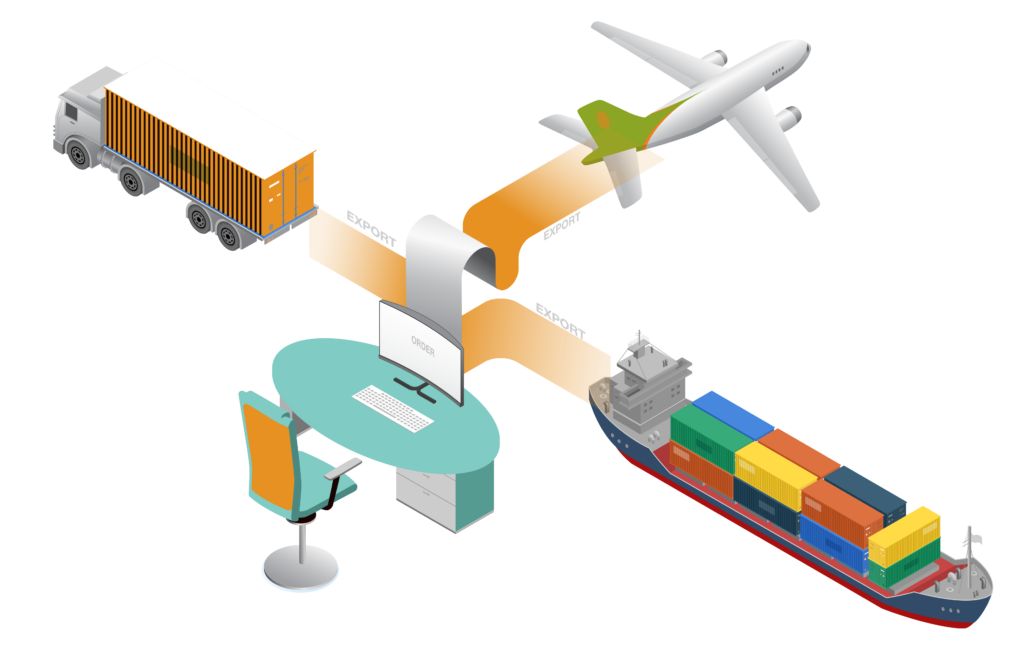
Exports, Cross-border Trade & Distribution
- Cross-border finance is fundamentally about “when risk transfers” and “what documents unlock payment.” Incoterms determine delivery point, cost responsibility, and risk transfer; if that is misunderstood, revenue timing, freight/insurance treatment, and claims exposure become messy. Documentary credits add another layer because banks pay based on strict document compliance under UCP rules—not commercial intent—so avoidable discrepancies can delay or block realization. Logistics claims, demurrage exposure, and document lead times (B/L, COO, inspection certificates) often become the real drivers of cash conversion.
- Where we go deeper: Incoterms-driven risk/cost mapping, LC document workflow discipline (compliance-first), discrepancy prevention, shipment-to-realization cycle control, and cash conversion improvement by tightening documentation and exception handling.
Hospitality, QSR, Cloud Kitchens & Aggregator-led F&B
F&B profitability is controlled through leakage prevention, not just sales growth. The most useful lens is prime cost (COGS + labor) and the gap between theoretical recipe cost and actual consumption—because variance reveals pilferage, wastage, portion creep, and procurement inconsistency. Aggregators create another reconciliation layer through commission structures, promotions, cancellations, refunds, and delayed settlements. Multi-outlet operations require outlet-wise truth, because one leaky outlet can destroy the economics of the whole chain.
Where we go deeper: recipe/yield discipline and food cost variance, waste/spoilage controls, aggregator settlement-to-bank reconciliation, discount/promo economics, and outlet-level profitability integrity driven by actual consumption patterns.
- F&B profitability is controlled through leakage prevention, not just sales growth. The most useful lens is prime cost (COGS + labor) and the gap between theoretical recipe cost and actual consumption—because variance reveals pilferage, wastage, portion creep, and procurement inconsistency. Aggregators create another reconciliation layer through commission structures, promotions, cancellations, refunds, and delayed settlements. Multi-outlet operations require outlet-wise truth, because one leaky outlet can destroy the economics of the whole chain.
- Where we go deeper: recipe/yield discipline and food cost variance, waste/spoilage controls, aggregator settlement-to-bank reconciliation, discount/promo economics, and outlet-level profitability integrity driven by actual consumption patterns.

Technology, SaaS & Subscription Businesses
- SaaS finance breaks when contracts are treated like simple invoices. The hard part is correctly separating what the customer is buying (subscription, implementation, support, usage, credits) and recognizing revenue based on delivery—not billing. Upgrades/downgrades, renewals, mid-term scope changes, and “free months” create contract modifications that can change revenue timing, contract assets/liabilities, and metrics like ARR/NRR in ways that confuse founders and investors if not handled consistently. Usage-based pricing adds another layer because consideration is variable and needs disciplined estimation and constraint logic.
- Where we go deeper: multi-element allocation approaches, upgrade/downgrade mechanics, usage/overage recognition, renewal cohorts vs accounting revenue, and clean definitions for ARR/MRR that reconcile to statutory numbers.
E-commerce, D2C & Marketplace Sellers
- E-commerce finance is settlement-first, not invoice-first. Marketplace payout statements net off commissions, shipping, collection fees, returns, refunds, replacements, chargebacks, promotional funding, penalties, and “surprise” retro-adjustments—so sales, cash, and profitability will not match unless settlement logic is engineered properly. The repeat leakage points are return/refund timing, fee mismatches, and unresolved deductions that quietly erode contribution margin. COD businesses add further complexity due to remittance cycles and RTO. Multi-channel sellers also face duplication risk when orders, gateways, and bank credits are not stitched into a single transaction chain.
- Where we go deeper: channel-wise payout-to-bank matching, returns/refunds/chargebacks lifecycle accounting, promo-funding treatment, deduction dispute trackers, and contribution margin truth based on actual settlements.
Manufacturing & Industrial
- Manufacturing economics are driven by yield, throughput, and absorption—not just purchase costs. If you don’t isolate material yield loss, scrap, rework, and downtime, your “gross margin” will look fine while cash and efficiency deteriorate. Plants need standard costing and variance analysis that clearly separates price variance (procurement), usage/yield variance (production), and overhead absorption (capacity/utilization). WIP valuation, multi-stage production, subcontract job-work, and quality-related costs require disciplined logic so profitability is credible at product-line and batch levels.
- Where we go deeper: standard cost setting, variance trees (price vs usage vs yield vs mix), WIP and conversion-cost discipline, batch/job costing, and profitability by SKU/product family based on real process losses.
Logistics, Freight & Warehousing
- Logistics margins are won or lost in exceptions: detention/demurrage, accessorials, claims, penalties, and disputes. Revenue and cost cut-offs are also tricky because delivery, POD, invoicing, and carrier bills rarely line up in the same period. Without contract-wise and lane-wise logic, you end up with “profitable” customers whose deductions and penalties are never recovered. Container business adds a separate dimension because demurrage/detention definitions vary by carrier and region; one wrong assumption can create unbilled exposure.
- Where we go deeper: accrual/cut-off frameworks for freight cycles, accessorial capture and recovery, demurrage/detention ownership rules, claims/penalties accounting, and true lane/customer profitability after deductions.

Construction, EPC & Project Businesses
- Project finance breaks when change orders, claims, and retentions are treated casually. Construction-style contracts often require revenue recognition “over time” using progress measurement (frequently cost-to-cost), but that only works if cost-to-complete discipline is real and continuously updated. The most painful issues happen with unpriced change orders and claims—where scope is approved but price is pending—because they behave like variable consideration and can drive volatile cumulative catch-ups if not controlled. Liquidated damages, performance penalties, and loss-making contracts also need early identification to avoid end-of-project shocks.
- Where we go deeper: progress measurement governance, cost-to-complete controls, unpriced change orders/claims handling, retention mechanics, LD/penalty modeling, and contract-level margin integrity throughout the project lifecycle.
![06.Architecture_building_house_following_the_home_design_illustration_concept_vector____ [Converted]-01-01](https://srmgc.in/wp-content/uploads/elementor/thumbs/06.Architecture_building_house_following_the_home_design_illustration_concept_vector____-Converted-01-01-1-scaled-rkndq62l5mgimqywtng1t4dvq2f8sutmqsgcz6jvcg.png "06.Architecture_building_house_following_the_home_design_illustration_concept_vector____ [Converted]-01-01")
Real Estate Developers & Project-led Real Assets
- Real estate finance is constrained by regulation and buyer cash flows, not just construction spend. In India, RERA creates a structural requirement to keep a large portion of collections in a project-specific separate account and restrict withdrawals to project purposes—so project cash planning must reflect those locks, certification trails, and timing realities. Cancellations/refunds, re-bookings, and milestone-based collections create real cash volatility that needs project-level truth (not company-level averages). Joint development structures, landowner payouts, and phased approvals add further complexity in project economics and reporting credibility.
- Where we go deeper: project cash lock logic, withdrawal/certification trails, cancellation/refund exposure mapping, phase-wise project controls, and investor/lender-grade project reporting that reflects regulatory constraints.
![vecteezy_hospital-building-for-healthcare-background-vector_ [Converted]-01](https://srmgc.in/wp-content/uploads/elementor/thumbs/vecteezy_hospital-building-for-healthcare-background-vector_-Converted-01-scaled-rkvjmk0bns7lp4d7sky1mp4kz71idh85quelwcwmsw.png "vecteezy_hospital-building-for-healthcare-background-vector_ [Converted]-01")
Healthcare Providers, Clinics, Hospitals & Diagnostics
- Healthcare revenue is a revenue-cycle problem: claim submission, denials, rework, underpayments, and contract rates drive cash more than “billings.” Payer contracts often contain complex rate cards, bundling rules, authorization requirements, and denial triggers—so cash leakage typically shows up as a growing pile of unresolved denials and short-payments. Package billing versus itemized billing, doctor payout structures, and consumables/drug usage can create margin distortion unless controls exist at procedure/service-line levels.
- Where we go deeper: denial root-cause classification, underpayment identification against payer contracts, rework economics (what is worth appealing), service-line margin integrity, and receivables aging that reflects payer behavior (not just invoice dates).
![08.vecteezy_free-flat-design-vector-business-elements-and-icons_150578 [Converted]-01-01](https://srmgc.in/wp-content/uploads/elementor/thumbs/08.vecteezy_free-flat-design-vector-business-elements-and-icons_150578-Converted-01-01-scaled-rkndqars3smy8ss327h6nl76ozs2vccaffpsdkcwhc.png "08.vecteezy_free-flat-design-vector-business-elements-and-icons_150578 [Converted]-01-01")
NBFC, Lending Ops & Credit-led Fintech
- Credit businesses live and die by portfolio classification discipline. “Overdue” is not just collections tracking—it impacts asset classification, income recognition, and provisioning outcomes. RBI-driven norms (like the 90-days overdue trigger for NPA identification in many contexts) make day-count accuracy and borrower-wise classification logic critical. Restructures, settlements, write-offs, bounce charges, and collection agency performance must be handled in a way that keeps the loan book auditable and investor/lender-ready.
- Where we go deeper: clean loan-tape integrity (disbursement → schedule → collections → exceptions), delinquency and classification logic, restructuring and settlement accounting, collection performance attribution, and portfolio reporting that stands up to lender scrutiny.
Renewable Energy Projects (Solar/Wind/Hybrid/RTC)
- Renewables are contract-led businesses: PPA terms decide billing, payment security, penalties, and cash stability. Project reporting needs to follow how energy is metered, how billing periods are defined, and how tariff components apply—not generic “units × rate.” Scheduling, forecasting, deviation settlement mechanisms, and curtailment/availability definitions can materially impact realized cash flows depending on the PPA and grid rules. If REC revenue is part of the model, then issuance, validity, and trading mechanics need operational rigor so the value does not remain theoretical.
- Where we go deeper: PPA-driven billing logic, metering-to-invoice integrity, deviation/availability impact tracking, cash security and payment risk mapping, and REC readiness (issuance/trading workflows aligned to registry procedures).
EV Charging Networks (CPOs, Roaming, Fleet Charging)
- EV charging is a utility-like business with telecom-like reconciliation issues. Power tariffs and demand charges can swing unit economics dramatically, especially under time-of-day or time-of-use structures, while uptime and utilization decide whether capex ever pays back. If the network participates in roaming (EMSP/CPO interoperability), financial reconciliation becomes session-led: authorization, tariff exchange, session logs, and clearing-house settlement must all tie out—otherwise revenue leakage, disputes, and delayed payouts become routine.
- Where we go deeper: station-level unit economics tied to tariff structure and demand charges, utilization and downtime impact modeling, session-to-cash reconciliation, roaming settlement readiness (protocol/clearing workflows), and dispute management frameworks for partner networks.
Exports, Cross-border Trade & Distribution
- Cross-border finance is fundamentally about “when risk transfers” and “what documents unlock payment.” Incoterms determine delivery point, cost responsibility, and risk transfer; if that is misunderstood, revenue timing, freight/insurance treatment, and claims exposure become messy. Documentary credits add another layer because banks pay based on strict document compliance under UCP rules—not commercial intent—so avoidable discrepancies can delay or block realization. Logistics claims, demurrage exposure, and document lead times (B/L, COO, inspection certificates) often become the real drivers of cash conversion.
- Where we go deeper: Incoterms-driven risk/cost mapping, LC document workflow discipline (compliance-first), discrepancy prevention, shipment-to-realization cycle control, and cash conversion improvement by tightening documentation and exception handling.
Hospitality, QSR, Cloud Kitchens & Aggregator-led F&B
F&B profitability is controlled through leakage prevention, not just sales growth. The most useful lens is prime cost (COGS + labor) and the gap between theoretical recipe cost and actual consumption—because variance reveals pilferage, wastage, portion creep, and procurement inconsistency. Aggregators create another reconciliation layer through commission structures, promotions, cancellations, refunds, and delayed settlements. Multi-outlet operations require outlet-wise truth, because one leaky outlet can destroy the economics of the whole chain.
Where we go deeper: recipe/yield discipline and food cost variance, waste/spoilage controls, aggregator settlement-to-bank reconciliation, discount/promo economics, and outlet-level profitability integrity driven by actual consumption patterns.
- F&B profitability is controlled through leakage prevention, not just sales growth. The most useful lens is prime cost (COGS + labor) and the gap between theoretical recipe cost and actual consumption—because variance reveals pilferage, wastage, portion creep, and procurement inconsistency. Aggregators create another reconciliation layer through commission structures, promotions, cancellations, refunds, and delayed settlements. Multi-outlet operations require outlet-wise truth, because one leaky outlet can destroy the economics of the whole chain.
- Where we go deeper: recipe/yield discipline and food cost variance, waste/spoilage controls, aggregator settlement-to-bank reconciliation, discount/promo economics, and outlet-level profitability integrity driven by actual consumption patterns.


